the bioregional movement - in the phase of co-creation
A Living Mycelial Network
A Response to the Polycrisis
A Response to the Polycrisis
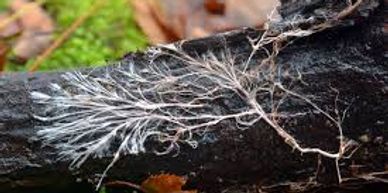
The bioregional movement functions much like a mycelial network, an intricate, living web that connects, nourishes, and supports diverse life across a landscape. Just as mycelium facilitates communication and resource sharing among trees, bioregional efforts weave relationships among communities, ecosystems, and regenerative initiatives. This movement emphasizes relational intelligence, deep place-based connection, and decentralized collaboration, allowing for adaptive growth and resilience.
By mirroring the natural processes of mycelial networks, bioregionalism nurtures regenerative systems rooted in trust, reciprocity, and the wisdom embedded in each unique place.
A Response to the Polycrisis
A Response to the Polycrisis
A Response to the Polycrisis

At its core, the bioregional movement is a grounded and hopeful response to the polycrisis, our interwoven ecological, economic, social, and spiritual breakdowns. Around the world, people are rediscovering their bioregions as meaningful units of belonging and regeneration. Ecological stewardship, Indigenous knowledge, and systemic innovation are being brought together to heal landscapes and communities.
Yet these efforts often face a missing link: the connective tissue that aligns resources, governance, and relational infrastructure across a region. Equally vital is the inner connective tissue—the shift from scarcity and control toward trust, reciprocity, and stewardship of living systems.
Urgent Needs in the Movement
A Response to the Polycrisis
Emulating Mycelial Intelligence

Across many bioregions, local teams and initiatives are overwhelmed, under-resourced, and fragmented. They navigate unclear pathways, lost relationships, and barriers to regenerative funding. Participatory governance is rare, and the emotional weight of working alone, amid urgent ecological and social collapse, is heavy.
What is emerging globally is a recognition that bioregional regeneration requires shared tools, shared stories, and shared infrastructure, not to impose a model, but to support each region’s unique expression.
Emulating Mycelial Intelligence
Emulating Mycelial Intelligence
Emulating Mycelial Intelligence

The bioregional movement is not driven by fast growth, extractive economics, or top-down planning. It centers:
- slow, place-rooted transformation
- relationship and trust
- Indigenous lifeways and cultural memory
- collaborative, community-held governance
- regenerative economics and circular resource flows
Regions evolve through self-organizing emergence, discovering what is needed, what wants to grow, and how to support each other across watersheds, cultures, and generations.
Mapping Ecosystems
Emulating Mycelial Intelligence
Unlearning & Relearning
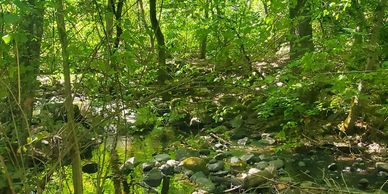
Like mycelium sensing its forest, bioregional efforts often begin by mapping the social, historical, ecological, and economic landscapes that shape a place. This mapping process:
- reveals existing assets and relationships
- makes visible the watershed or “true shape” of the region
- surfaces governance gaps and hidden strengths
- identifies where resources flow or become stuck
The result is a living map of relationships, a foundation for aligning efforts and cultivating regenerative pathways rooted in local realities.
Unlearning & Relearning
Emulating Mycelial Intelligence
Unlearning & Relearning

Bioregionalism asks us to unlearn inherited systems of extraction and control and relearn more adaptive, relational ways of organizing. Teams experiment with:
- decentralized, trust-based decision-making
- culturally relevant governance rooted in local traditions
- community-based economic models that circulate resources
- regenerative capital flows that support long-term ecological health
This work contrasts sharply with dominant economic structures and invites a deep shift in cultural soil.
when is a bioregion thriving?

Thriving Bioregions
Living Systems Leadership
Living Systems Leadership
A thriving bioregion becomes a self-organizing ecosystem, relationally coherent, economically regenerative, and aligned with the rhythms of life. We know a bioregion is flourishing when:
- diverse stakeholders organize together in mutual trust
- governance is participatory and widely trusted
- capital flows follow the logic of living systems
- collab
A thriving bioregion becomes a self-organizing ecosystem, relationally coherent, economically regenerative, and aligned with the rhythms of life. We know a bioregion is flourishing when:
- diverse stakeholders organize together in mutual trust
- governance is participatory and widely trusted
- capital flows follow the logic of living systems
- collaboration becomes natural and self-propagating
- the land and waters show signs of renewal
This is biocultural transformation, a shift in how people relate to each other, to their place, and to the more-than-human world.
Living Systems Leadership
Living Systems Leadership
Living Systems Leadership
ThePivot.Earth participates in the bioregional movement as a network steward and mycelial node, supporting relational connection, ecosystem mapping, regenerative finance design, and culturally grounded governance. We walk alongside communities as they reclaim story, sovereignty, and stewardship of their place.
With deep experience in syste
ThePivot.Earth participates in the bioregional movement as a network steward and mycelial node, supporting relational connection, ecosystem mapping, regenerative finance design, and culturally grounded governance. We walk alongside communities as they reclaim story, sovereignty, and stewardship of their place.
With deep experience in systems thinking, regenerative economics, sociocratic governance, and trauma-informed facilitation, we help cultivate conditions for emergence, never imposing a model, but supporting each bioregion as a living, evolving ecosystem.
Regenerative Capital
Living Systems Leadership
Regenerative Capital
Within the bioregional movement, regenerative capital is less about maximizing financial return and more about circulating value in ways that strengthen relationships, ecosystems, and culture. Success looks like large numbers of diverse people experiencing thriving relationships in a living, place-based economy, and co-creating the condit
Within the bioregional movement, regenerative capital is less about maximizing financial return and more about circulating value in ways that strengthen relationships, ecosystems, and culture. Success looks like large numbers of diverse people experiencing thriving relationships in a living, place-based economy, and co-creating the conditions for that economy to deepen over time.
Across bioregions, communities are beginning to:
- Design culturally grounded onboarding that aligns people to shared values and purpose
- Build community-designed tools, protocols, and agreements that reflect local realities
- Grow a living pipeline of regenerative projects rooted in watershed, culture, and need
- Attract, steward, and recirculate capital so resources stay in relationship with the land and community
Regenerative capital in this context becomes a flow, not a stock, a way of resourcing the long arc of ecological healing, social repair, and biocultural renewal.
our definition of success

WHAT DOES THRIVING LOOK LIKE?
The bioregion becomes a thriving, self-organizing ecosystem, relationally coherent, economically regenerative, and in reciprocal partnership with all life. Not driven by extraction or control.
By listening. By remembering. By growing together.
We know it is working when:
- The community is clear, coordinated, and creative
- Governance is participatory and trusted
- Capital flows match the rhythm of local life
- Teams support other bioregions, without prompting
- The land, waters, and more-than-human world show signs of renewal
This is biocultural transformation.
OUR EXPERTISE
ThePivot.Earth is uniquely equipped to guide bioregional organizing teams through complex transformation. We bring a rare combination of systems thinking, regenerative finance design, and trauma-informed facilitation, customized to each bioregion's ecological, cultural, and relational context.
This Journey doesn’t impose a model; it curates conditions for emergence, walking alongside teams as they reclaim story, sovereignty, and stewardship of their place. We’ve supported teams from early trust-building to ecosystem-scale coordination, governance prototyping, and regenerative capital flows. With deep experience, active relationships across bioregions, and a strong orientation toward inner and outer regeneration, ThePivot is a trusted mycelial node in the growing global bioregional movement